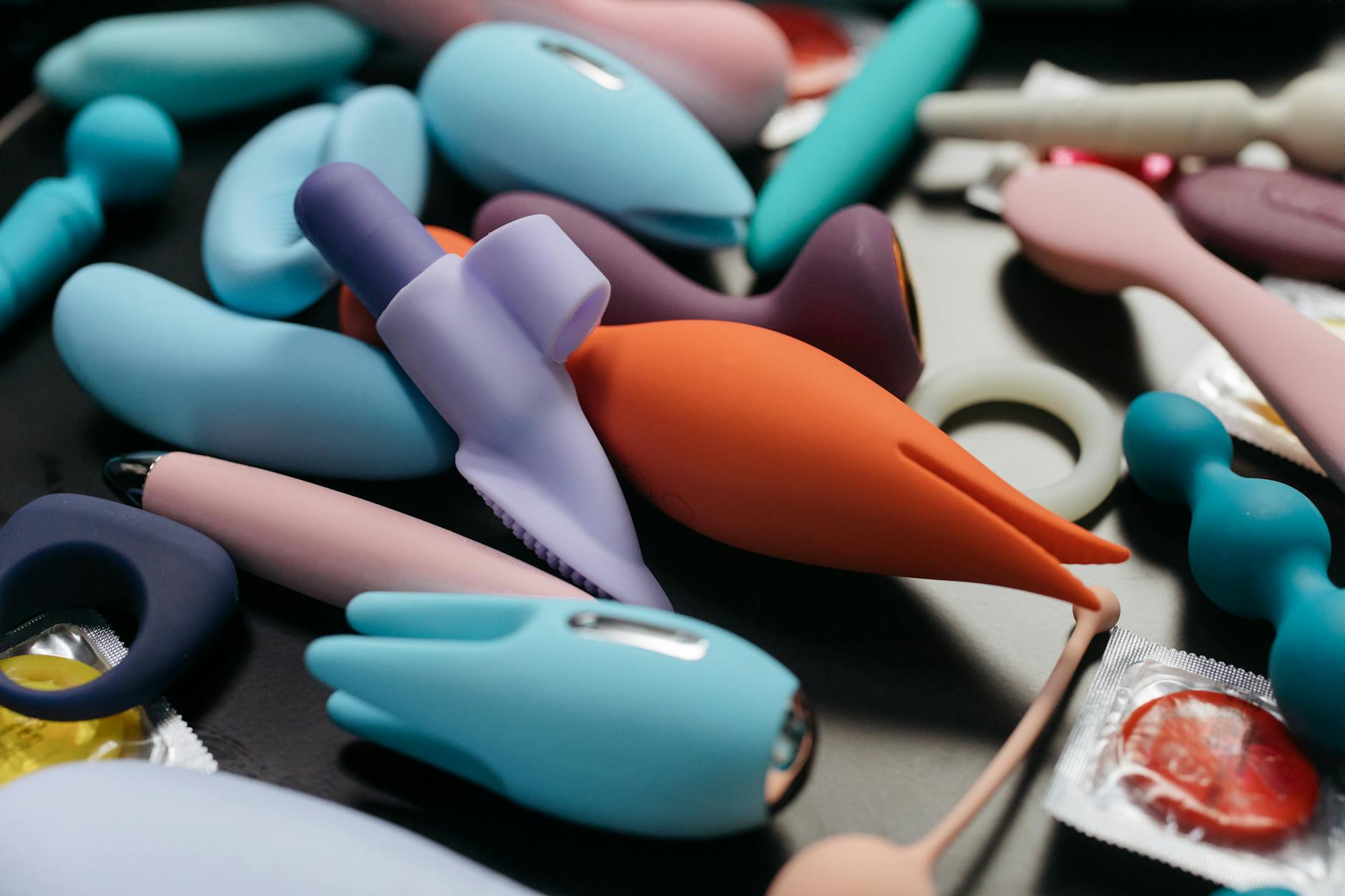
High sensation sensitivity is not a problem to fix
Let's be real. If you have high sensation sensitivity, you've probably heard it framed as a limitation. Too sensitive. Overstimulated too quickly. Can't handle vibrations that work for everyone else. The subtext is always: your body is inconvenient.
It's not. It's just different. And once you understand how to work with it instead of against it, lemon vibrators can actually be some of the most reliable tools for consistent, intense orgasms.
The trick is understanding what's actually happening in your nervous system and then making small, deliberate adjustments to how you use them.
What high sensation sensitivity actually means
Your nerve endings aren't broken. They're just more responsive. This could be wired into your genetics. It could be related to sensory processing sensitivity, a trait that affects about 15 to 20 percent of the population. It could come from past trauma, medication, or hormonal fluctuations. It might show up only when you're stressed or only during certain times of your cycle. Context matters.
What matters for pleasure is this: your clitoral tissue has more densely packed nerve endings, or those nerves are firing more easily, or your brain is processing touch signals at higher volume. All of those mean that standard vibration intensity can feel overwhelming pretty quickly. Not painful necessarily. Just too much, too fast. The sensation floods your system instead of building gradually.
Here's the thing though. That same sensitivity is your gateway to some of the most satisfying orgasms available. You don't need to spend 20 minutes building arousal. You don't need maximum power. You need precision and control.
Why lemon vibrators work well for high sensitivity
Most clitoral vibrators are built for one thing: maximum intensity. Rumble, buzz, patterns that escalate. If you have high sensation sensitivity, that's like turning every flavor dial to 10.
Lemon vibrators are different. Specifically, the suction-based design of lemon clitoral vibrators creates a completely different kind of stimulation than traditional vibration. Instead of buzzing directly on the tissue, suction gently pulls and releases, which spreads the sensation across a wider area and allows for more control at every intensity level. You can use pattern 1 or 2 and still get meaningful stimulation. You can build gradually instead of jumping straight into overwhelm.
That's why so many people with high sensation sensitivity report that lemon vibrators changed their experience entirely. They're not fighting the design. They're working with it.
Start absurdly low and stay there longer than feels necessary
If you have high sensation sensitivity, your default starting point should be the lowest pattern or intensity available. On a lemon vibrator, that's usually pattern 1.
Then stay there. Seriously. Twenty minutes if you need to.
The instinct with sensitivity is to move up quickly to avoid getting stuck. But that's backward. Staying at low intensity for extended periods does something counterintuitive. It allows your nervous system to acclimate to the sensation. Arousal builds. Your body relaxes instead of tensing against the stimulation. The pleasure deepens instead of sharpening.
I typically recommend setting a timer for at least 15 to 20 minutes at pattern 1 before considering a shift upward. If that sounds impossibly long, that's usually a sign you need to go even lower or adjust positioning.
Positioning and indirect contact are your tools
Direct contact at high sensation sensitivity is often too much. But indirect contact changes everything.
Try positioning the lemon vibrator so it's stimulating the area around the clitoris rather than the tip directly. For some people, that's the clitoral hood or the inner labia. For others, it's the side of the clitoral body. You're aiming for the same nerve pathways but through tissue that's less densely innervated.
Other positioning strategies that work:
- Hold the vibrator at a slight angle instead of perpendicular to your body. This distributes pressure across more surface area.
- Move it very slowly if you're in a pattern with motion, rather than holding it static.
- Use it through the fabric of underwear or a thin layer of cloth. This mutes intensity without losing sensation.
- Press it against your inner thigh or the area between your labia and thigh. The stimulation radiates to the clitoris more gently than direct application.
None of these are workarounds. They're legitimate techniques that many people prefer regardless of sensitivity. You're not settling. You're being strategic.
Breathwork and mental focus matter way more than you think
Here's where the nervous system piece becomes crucial. High sensation sensitivity often means your body is in a more activated state generally. Your fight-or-flight system is more easily triggered. That makes it harder to relax into pleasure because your body is bracing against the intensity.
Breathwork interrupts that pattern.
Deep breathing, specifically slow exhales, tells your parasympathetic nervous system that you're safe. This is the system that allows you to feel pleasure instead of just stimulus. It's the difference between sensation happening to you and sensation you're inviting in.
Try this: use the lemon vibrator at pattern 1 and focus on extending your exhales. Inhale for a count of 4, exhale for a count of 6 or 8. Do this for several minutes before allowing yourself to focus on the sensation. You'll notice the stimulation feels different. Less sharp, more diffuse. More pleasurable.
Mental focus matters for the same reason. If you're tense and monitoring intensity the whole time, your nervous system stays activated. If you can redirect focus to what feels good, to the physical sensations you actually want, your body relaxes. Arousal deepens. The same vibrator at the same pattern feels more satisfying because your nervous system is in receiving mode instead of defense mode.
Lubrication and hydration make huge differences
Dry tissue makes every sensation sharper and more uncomfortable. Adequately lubricated tissue is more forgiving. With high sensation sensitivity, lubrication isn't optional. It's foundational.
Use more than feels necessary. Water-based lube works beautifully with silicone lemon vibrators and gives you full control over how slick things are. Reapply as needed. This isn't about sexiness. It's about your nervous system having the physical conditions it needs to actually relax.
Beyond lube, hydration matters. Dehydration makes nerve endings more reactive. If you're consistently high-sensitivity, check your water intake. It sounds obvious and almost too simple to matter. It matters.
Know when to stop and why that's not failure
With high sensation sensitivity, sometimes arousal builds to a point where continuing feels overwhelming rather than good. This happens to many people. It's not dysorgasmia or a sexual problem. It's your nervous system saying it's reached its capacity.
When this happens, pause. Put the lemon vibrator down. Breathe. Let your arousal level settle. You can pick it back up in 30 seconds or 5 minutes. You're not losing progress. You're regulating your nervous system so it can continue.
Orgasm, when it comes, often arrives faster and more intensely after these pauses than if you'd forced through. Your body relaxes. Your nervous system downshifts slightly. Then when stimulation returns, the contrast is enough to push you over.
If orgasm doesn't happen on a given day, that's fine too. High sensitivity sometimes means your nervous system needs more favorable conditions. Lower stress, better sleep, less caffeine, emotional safety with a partner. Those physical and emotional conditions matter as much as the vibrator itself.
Communication and partnered use
If you're using a lemon vibrator with a partner, communication shifts everything. High sensation sensitivity often creates anxiety because you're worried about your body being inconvenient or slow or requiring too much accommodation.
It doesn't. But your partner needs to know that.
Specific conversation starters:
- "I need longer warm-up time and lower intensity. That's not negotiable and it's not about you."
- "If I ask to slow down or pause, I'm not losing interest. I'm keeping my nervous system regulated."
- "Direct contact feels too sharp. Indirect positioning or going through fabric works better for me."
- "Being touched while using the lemon vibrator (on my inner thigh, holding my hand) actually helps me relax."
Many people with high sensitivity partners find that adding a second point of contact, like holding hands or being touched gently elsewhere while the lemon vibrator works, actually reduces overwhelm. It grounds the experience. It makes it feel connected instead of intense.
When sensitivity changes and what that means
Sensation sensitivity isn't static. Hormonal cycles, stress levels, sleep quality, relationship security, medication, and age all shift how your body responds to stimulation.
If you've always had high sensitivity and suddenly things feel more manageable, that's worth noticing. Did something in your environment change. Did your stress level drop. Are you sleeping better. Are you less anxious.
If sensitivity suddenly increases, same questions. These changes often signal something real about your nervous system state or your physical health. They're worth paying attention to.
The lemon vibrators remain a reliable tool through all of it. You might find yourself using higher patterns during lower-sensitivity windows. You might stick to indirect contact and pattern 1 for years. Both are fine. The design is flexible enough to work with your body as it changes.
FAQ: high sensation sensitivity and lemon vibrators
What's the difference between high sensation sensitivity and pain during pleasure?
High sensation sensitivity means the stimulation feels intense or overwhelming but not painful. It registers as too much, not wrong. Pain during pleasure is a separate issue that usually requires investigation. If you're experiencing pain, talk to a healthcare provider or pelvic health specialist before assuming it's sensitivity. Pain and sensitivity need different approaches.
Can I build up tolerance to high sensation sensitivity?
Tolérance isn't really the goal. Your nervous system isn't defective. What actually happens with consistent, gentle practice is that your nervous system becomes more comfortable with the sensation itself. You learn to relax into it instead of bracing against it. That feels like increased tolerance but it's actually decreased defensiveness. Your body learns that the stimulation is safe, so it doesn't activate your fight-or-flight response. That makes pleasure more accessible.
Is high sensation sensitivity related to being on the autism spectrum?
Sensory processing sensitivity and autism spectrum traits can overlap, but they're not the same thing. Some autistic people have high sensation sensitivity. Some don't. Some neurotypical people have high sensation sensitivity. It's its own thing. The overlap means that strategies that work for both (slower pacing, indirect contact, controlled environments, clear communication) are helpful regardless of whether sensitivity is autistic trait or sensory processing sensitivity or just how your body is wired.
Do I need a special kind of lemon vibrator for high sensitivity?
No. The standard lemon clitoral vibrator is designed with sensitivity in mind already. The suction mechanism is inherently more adjustable than traditional vibrators. The patterns start low and build gradually. That baseline design works well for high sensitivity. You don't need a special version. You need strategies for using the one that exists.
Will my sensitivity decrease after menopause?
Sometimes yes, sometimes no, sometimes it shifts. Estrogen levels affect nerve sensitivity. When estrogen drops significantly, some people find their sensation sensitivity decreases. Others find it increases because tissue becomes thinner and more reactive. You won't know until it happens. The good news is that lemon vibrators work across the full range of these changes. You'll just adjust pacing and positioning as needed.
How do I explain high sensation sensitivity to a new partner without it being awkward?
Frame it as a preference, not a problem. "I really enjoy slow builds and lower intensity. My nervous system processes sensation more intensely, so that's what actually feels best for me." Partner, you already know this. Most people respond well to clear information. If a partner reacts with skepticism or makes you feel broken for it, that's information about them, not about you. You deserve a partner who thinks your body is interesting, not inconvenient.
The bottom line: your sensitivity is a feature
High sensation sensitivity gets framed as a limitation in sex writing. It's not. It's a different way of experiencing pleasure that, once you understand it and work with it, often delivers more consistent and more intense orgasms than people working with lower sensitivity.
Lemon vibrators are built for this. Suction-based design. Adjustable patterns. Flexible positioning. A tool that works with your nervous system rather than against it.
Your body deserves that. You deserve pleasure that actually fits how you're wired. That's what lemon clitoral vibrators make possible.
Ready to explore what works for your body? Check out the full collection at Shop Lemon Vibrator, or reach out with questions. You deserve tools designed for real bodies.